
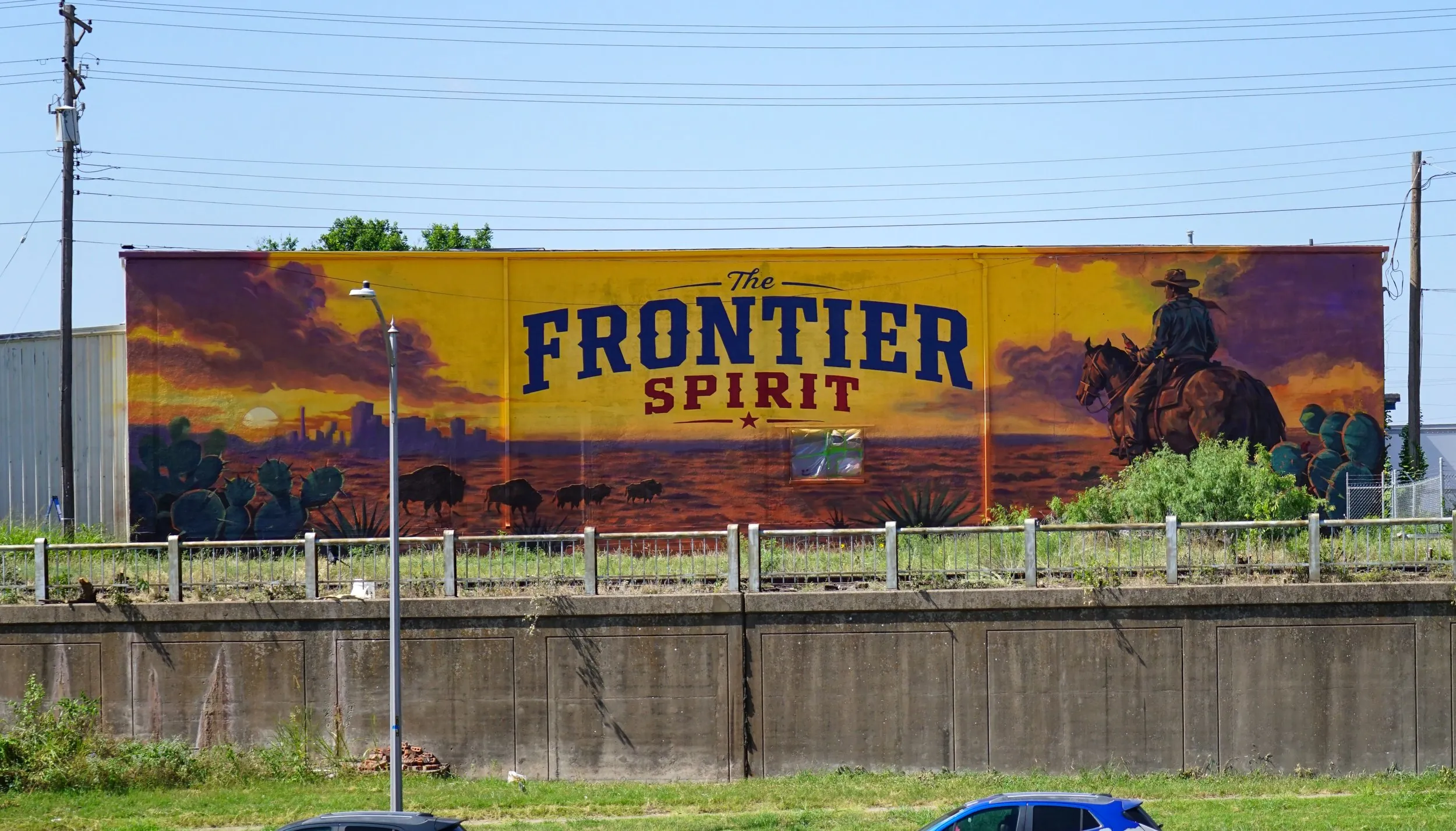
A properly specified exterior mural lasts ten to twenty years. A badly specified one starts failing in two. The difference is almost never the painting: it is the surface preparation underneath and the protective coating on top. This page explains what actually determines how long artwork survives on a wall, so you can judge a quote rather than take one on faith.
How long murals actually last
| Situation | Realistic lifespan |
|---|---|
| Interior mural, quality paint | Decades. Interiors are limited by redecoration, not by the artwork. |
| Exterior, UV-resistant paint, sealed with a protective coating | 10 to 20 years before it needs attention. |
| Exterior, correct paint, no coating | 5 to 8 years, and vulnerable to graffiti damage throughout. |
| Exterior, standard wall paint | 2 to 3 years before noticeable fading and chalking. |
| Any mural on unprepared or failing substrate | Fails early regardless of paint quality, because the wall fails underneath it. |
For context, vinyl wall wrap manufacturers generally quote five to seven years outdoors before fading, lifting or edge failure. A sealed hand-painted mural comfortably outlives that, which is the part missing from most cost comparisons. We go through that trade-off properly on our hand-painted mural versus vinyl wrap page.
What actually destroys a mural
Ultraviolet light. The main enemy in Southern California. UV breaks down pigment, and some colors go first: reds and certain organic pigments fade well before blues and earth tones. This is why pigment selection matters as much as brand of paint, and why a mural that looked vivid in year one can look washed out in year three if the wrong colors carried the design.
Surface preparation failure. The most common cause of early failure and the least visible in a quote. Paint applied over chalking, dirty, damp or previously failing coatings does not bond to the wall, it bonds to the layer that is already letting go. It comes away in sheets a year later and it is not the artist’s paint that failed.
Moisture from behind. Rising damp, a failed parapet, a leaking downpipe. Water moving through masonry pushes coatings off from the inside, and no exterior product survives it. This is a building repair, not a painting problem, and it is worth resolving before commissioning artwork on that wall.
Graffiti and the removal of it. Tagging itself rarely destroys a mural. What destroys murals is removal: aggressive solvents, pressure washing at the wrong setting, or painting over the tag in an approximate color match. This is why the coating matters so much.
Anti-graffiti coatings, explained properly
There are two kinds and the difference is worth understanding before you approve a quote.
Sacrificial coatings are a wax-like barrier. When a tag is removed, the coating comes off with it, taking the paint away from the artwork surface. They are cheaper and they work, but the coating must be reapplied after every incident, and if nobody reapplies it, the wall is unprotected without anyone noticing.
Non-sacrificial coatings are a permanent clear film. Graffiti is cleaned off the surface and the coating stays intact, so the wall keeps its protection through repeated incidents. They cost more up front. Manufacturers in this category publish warranties in the ten to fifteen year range, which is the number worth asking any contractor to match.
On exterior work in exposed locations we specify non-sacrificial, because the failure mode of the cheaper option is silent. Nobody reapplies wax on schedule.
There is also a free option worth knowing about. Murals registered with the City of Los Angeles have historically received a protective anti-graffiti coating from the city’s mural program at no cost, up to a few hundred square feet. That is one of several reasons registering is worth doing rather than avoiding, and our permit guide covers the process.
What we specify, and why
- Full surface preparation. Cleaning, removal of failing material, patching and priming appropriate to the substrate. The invisible half of the job and the half that decides the lifespan.
- Exterior-grade UV-resistant paint, with pigment choices made knowing which colors hold and which do not.
- A protective clear coat over exterior work, non-sacrificial where the wall is exposed to tagging.
- Interior sealing in high-contact zones, so walls in gyms, lobbies and common areas can be cleaned repeatedly without the artwork lifting.
Maintenance, realistically
A correctly finished exterior mural needs almost nothing: an occasional wash, and prompt cleaning if it is tagged. Prompt matters more than method, because fresh graffiti lifts off a coated surface easily and old graffiti does not.
Somewhere past the ten year mark, most exterior walls benefit from a refresh: recoating, and touching in whichever colors have moved. That is a fraction of the original cost and resets the clock. Interior murals generally need nothing at all beyond normal cleaning.
If you are commissioning work and want to compare quotes properly, ask three questions: what surface preparation is included, what coating is specified and is it sacrificial or not, and what happens if the wall is tagged in year two. The answers separate a ten year mural from a three year one, and they rarely appear in the price alone. Our pricing guide explains what a complete quote should contain.
Mural durability questions
How long does an exterior mural last?
Ten to twenty years when it is painted with exterior-grade UV-resistant product over properly prepared surface and sealed with a protective coating. Without the coating, five to eight. With ordinary wall paint, two to three.
What is an anti-graffiti coating and do I need one?
A clear protective film over the finished artwork that lets graffiti be cleaned off without damaging the paint underneath. On any accessible exterior wall, yes. Removing a tag from an uncoated mural usually means repainting that section.
What is the difference between sacrificial and non-sacrificial coatings?
A sacrificial coating comes away with the graffiti and has to be reapplied after every incident. A non-sacrificial coating stays intact through repeated cleaning and carries manufacturer warranties in the ten to fifteen year range. We specify non-sacrificial on exposed exterior walls, because the sacrificial version fails silently when nobody reapplies it.
Why do some murals fade so quickly?
Usually one of three things: ordinary interior paint used outdoors, pigments that do not hold under UV, or surface preparation skipped so the paint bonded to a failing layer rather than the wall. Southern California sun is unforgiving about all three.
Can a damaged mural be repaired?
Yes, and this is a real advantage over printed wraps. Damage is retouched in place by the artist rather than a panel being reprinted, with no color-match risk across print batches.
Does maintenance cost anything?
Very little. An occasional wash, and prompt cleaning if it is tagged. Past roughly ten years an exterior wall benefits from recoating and touching in faded colors, at a fraction of the original cost.
Does the City of Los Angeles help protect murals?
Registered Original Art Murals have historically received a free protective anti-graffiti coating from the city’s mural program, up to a few hundred square feet. Confirm current terms with the Department of Cultural Affairs, which we do on every project.